
Selected work01 / 03eharmony

Case study / 01

Fewer rounds.Better posts.

eharmony's social team needed review, approval and publishing to run as one loop. I designed and built the tool that did it, then grew it into a desktop app the company bought.

Decision01 / 03eharmony design review
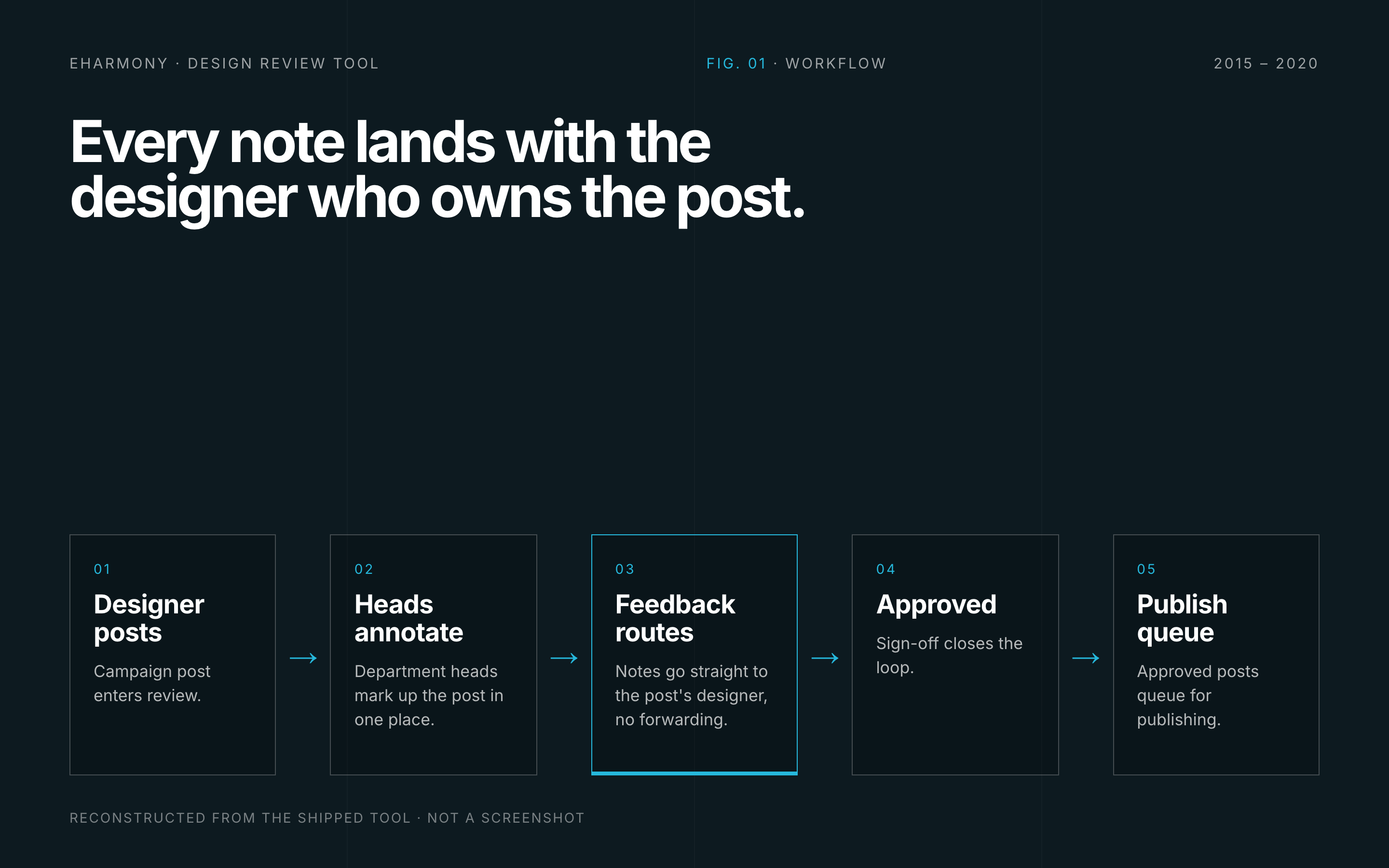
eharmonyWorkflow diagram
Diagram of the review flow: designer posts, heads annotate, feedback routes to the designer, approval, publishing queue.
The review loop, reconstructed from the shipped tool.
Decision / 01

Route the feedback

Every note should land with the person who fixes the work.

Reviewers annotated the post itself, and the tool sent each note to the designer who owned that post. Nobody had to collect comments and pass them on.

Approval closed the loop: signed-off posts went straight into the publishing queue, so a finished review was also a finished hand-off.
Next decision
Decision02 / 03eharmony design review
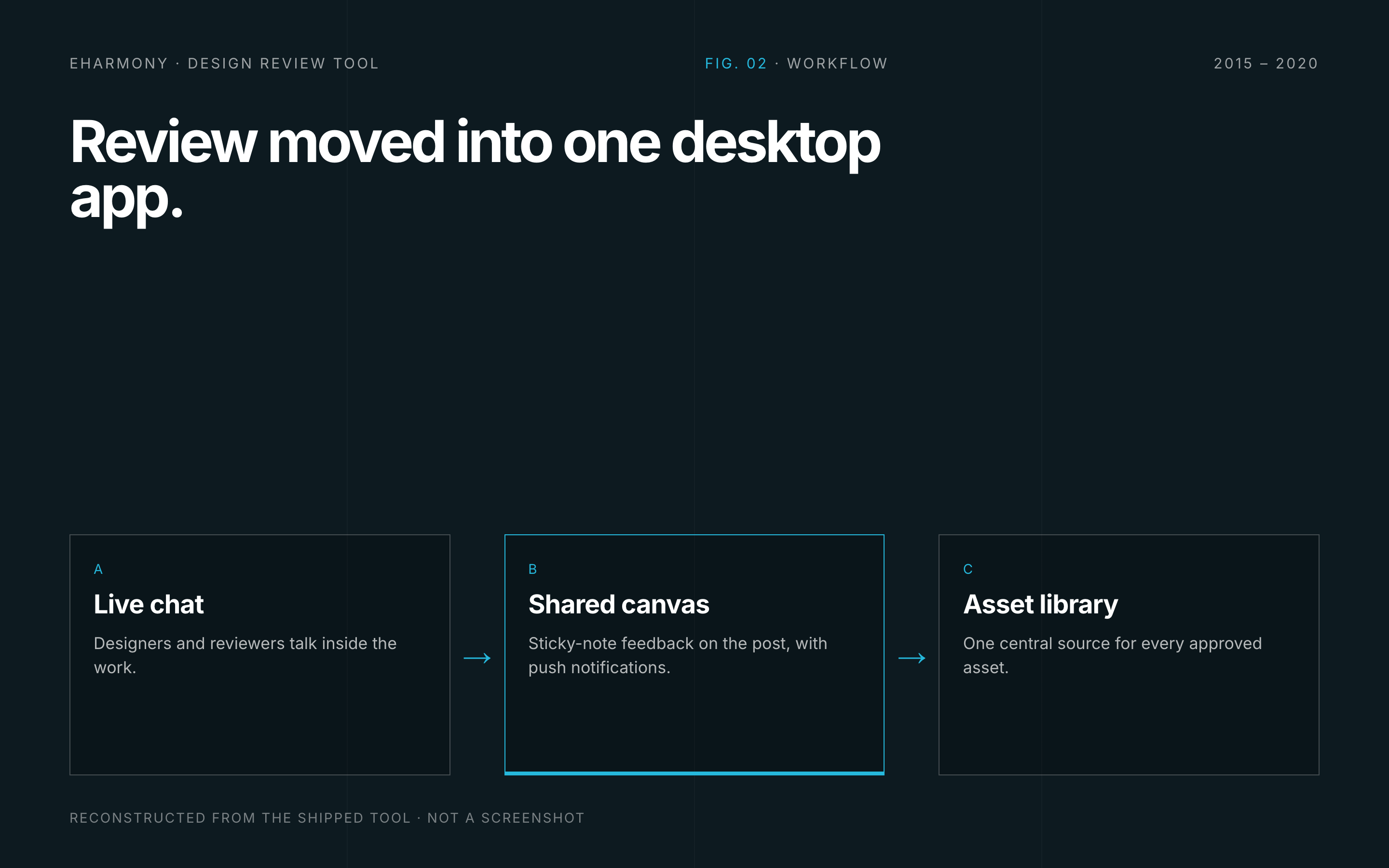
eharmonyWorkflow diagram
Diagram of the desktop app's three parts: live chat, a shared feedback canvas and an asset library.
The desktop app's three working surfaces.
Decision / 02

Bring the talk into the work

Feedback is faster when the conversation sits next to the thing being discussed.

I extended the web tool into an Electron app with live chat, a shared canvas for sticky-note feedback with push notifications, and one central asset library.

Designers and reviewers worked from the same post, the same thread and the same assets, which cut the review back-and-forth.

Next decision
Decision03 / 03eharmony design review
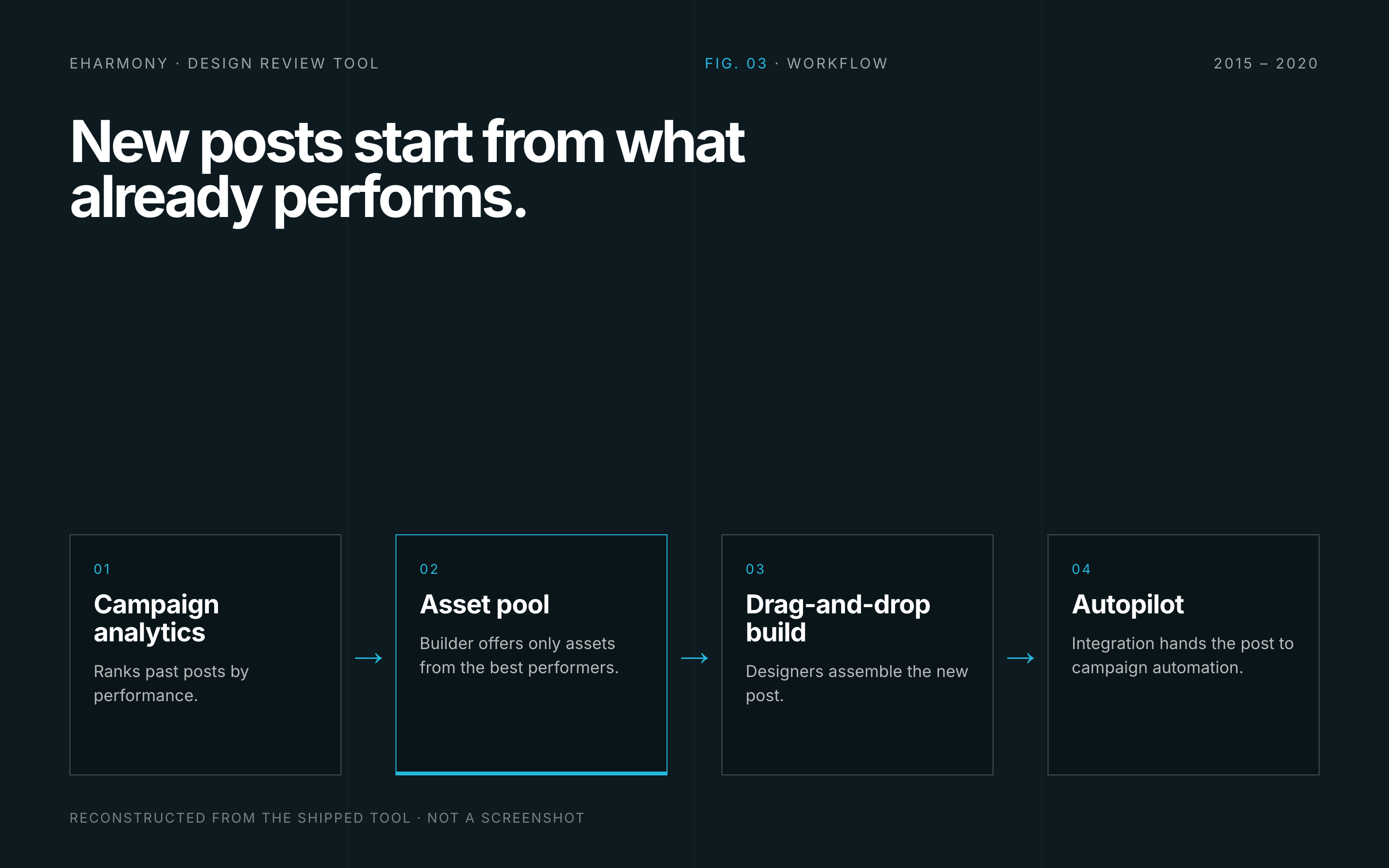
eharmonyWorkflow diagram
Diagram of the post builder: campaign analytics feed an asset pool, a drag-and-drop builder and an Autopilot hand-off.
Analytics decide which assets the builder offers.
Decision / 03

Start from what performs

A blank canvas is the slowest place to begin.

The post builder used campaign analytics to offer only assets from the best-performing posts, and designers assembled new posts by drag and drop.

An Autopilot integration carried finished posts into campaign automation, keeping the whole path inside one system.

Outcome
8–12%
Higher design-department efficiency
5.3%
Lift in overall campaign KPIs
18%
Lower costs over five years

eharmony bought the tools when the engagement ended. The same codebase became the base for DoYourUX (ION), a UX documentation platform tested with 3,300+ users.