Field notes02 / 04Experience design

SikaHaus practice / 02

Clarity is partof the service.

Good experience design reduces the work people must do to understand, trust, and use a product—especially when the subject is complex or consequential.

Best practice01 / 03Experience design
BAC Health ServicesLive capture
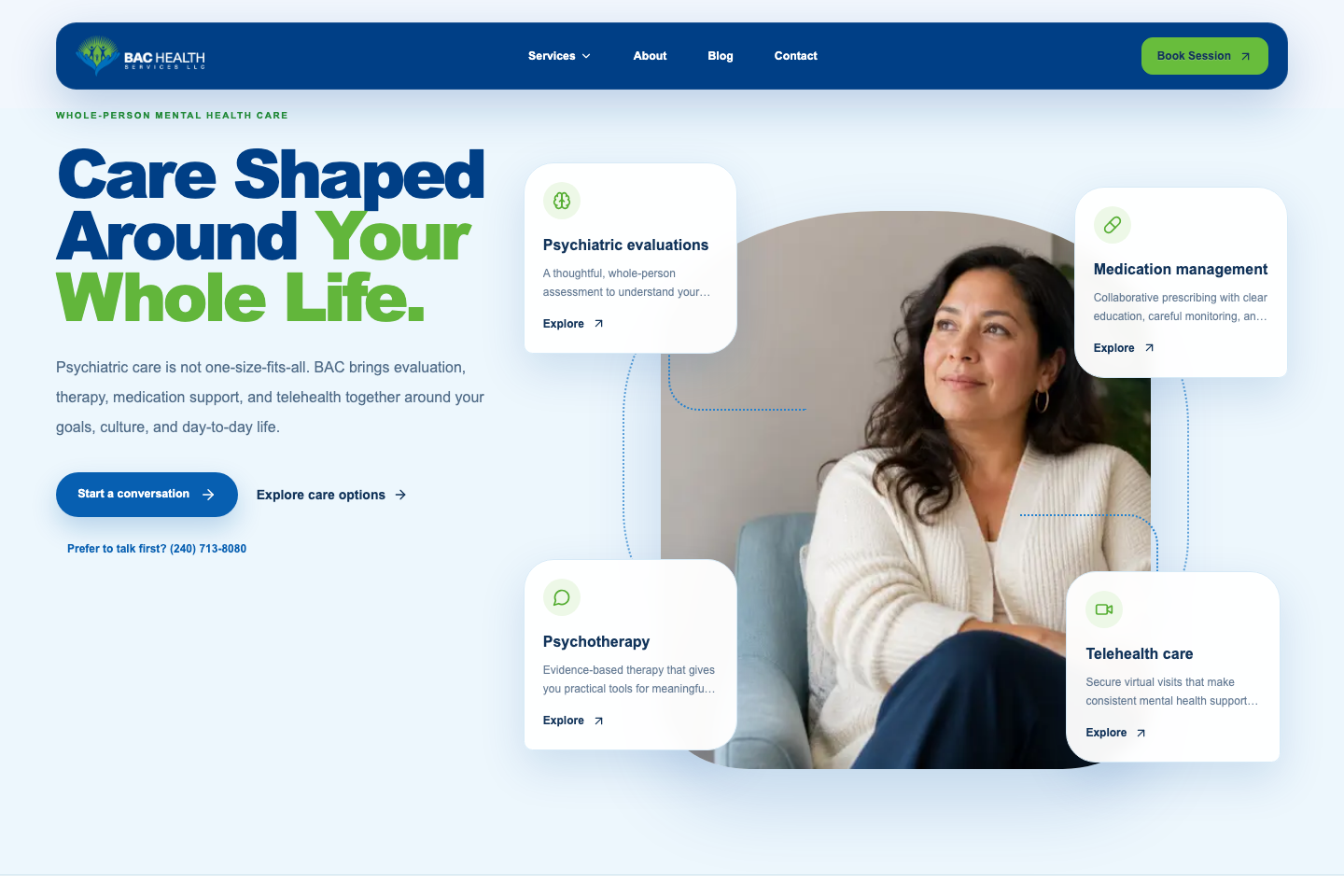
BAC Health Services homepage with large care headline, supporting copy, service cards, and booking actions.
Hierarchy helps visitors choose without asking them to understand the entire care model first.View public site ↗
Practice / 01

Make the next choice obvious

A visitor should understand the promise and the next useful action in one view.

We establish hierarchy with language before decoration: one primary promise, supporting context, a clear action, and secondary paths for people who need more information. Visual emphasis follows that order.

BAC’s opening experience balances care categories with two different levels of commitment—starting a conversation or exploring options—without turning the page into a wall of competing buttons.
Next practice
Best practice02 / 03Experience design
BAC Health ServicesLive capture
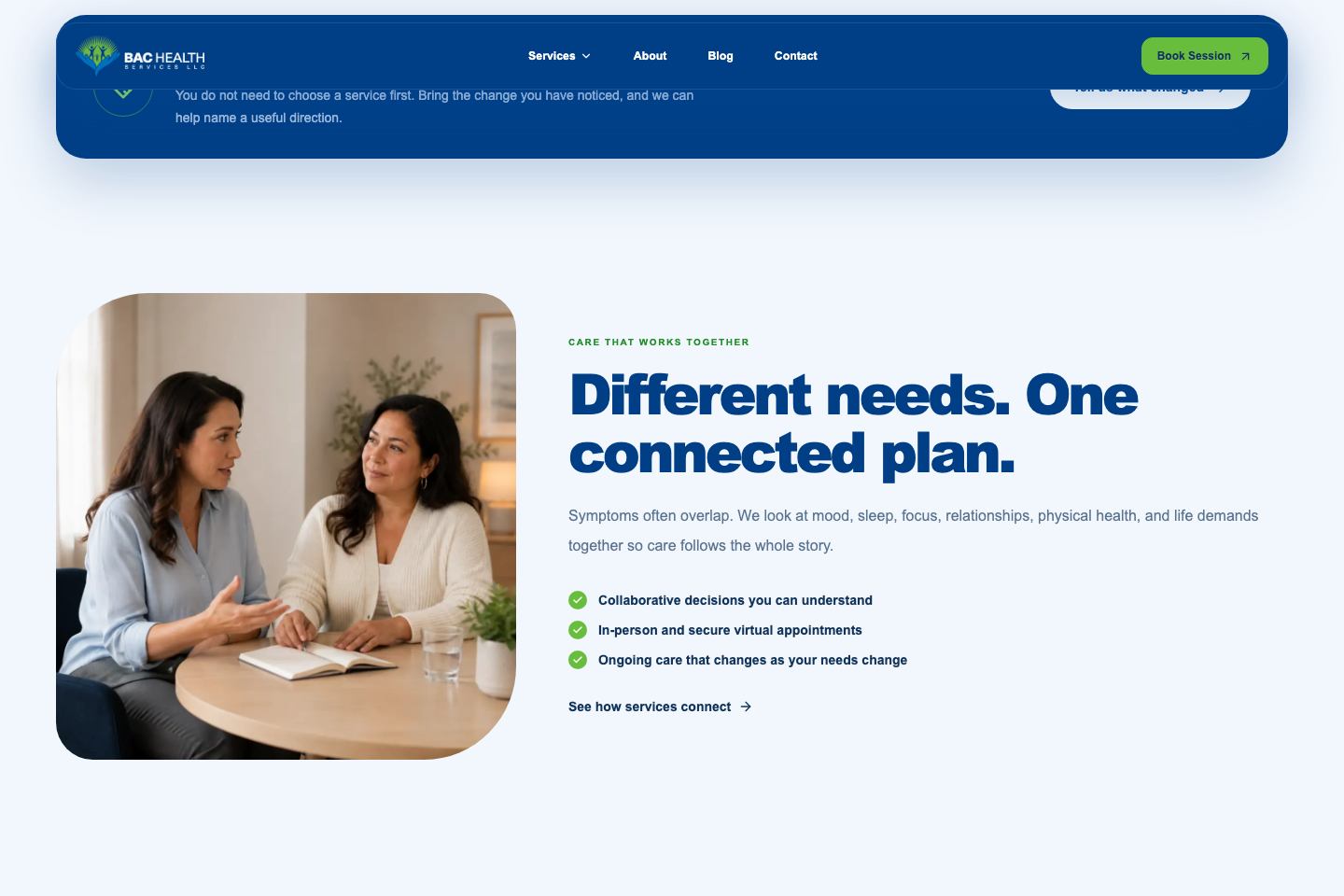
BAC Health Services section explaining a connected care plan beside a clinician and client photograph.
A complex service model is introduced as one understandable relationship.View public site ↗
Practice / 02

Stage complexity

Progressive disclosure lets detail arrive when it becomes useful.

Complex services need structure, not simplification theater. We group related ideas, introduce the system in plain language, and give people a deliberate path into detail while preserving a stable visual rhythm.

The connected-plan section pairs one human image with a concise explanation and three scannable commitments. Visitors can understand how services relate before choosing a specific clinical category.

Next practice
Best practice03 / 03Experience design
BAC Health ServicesLive capture
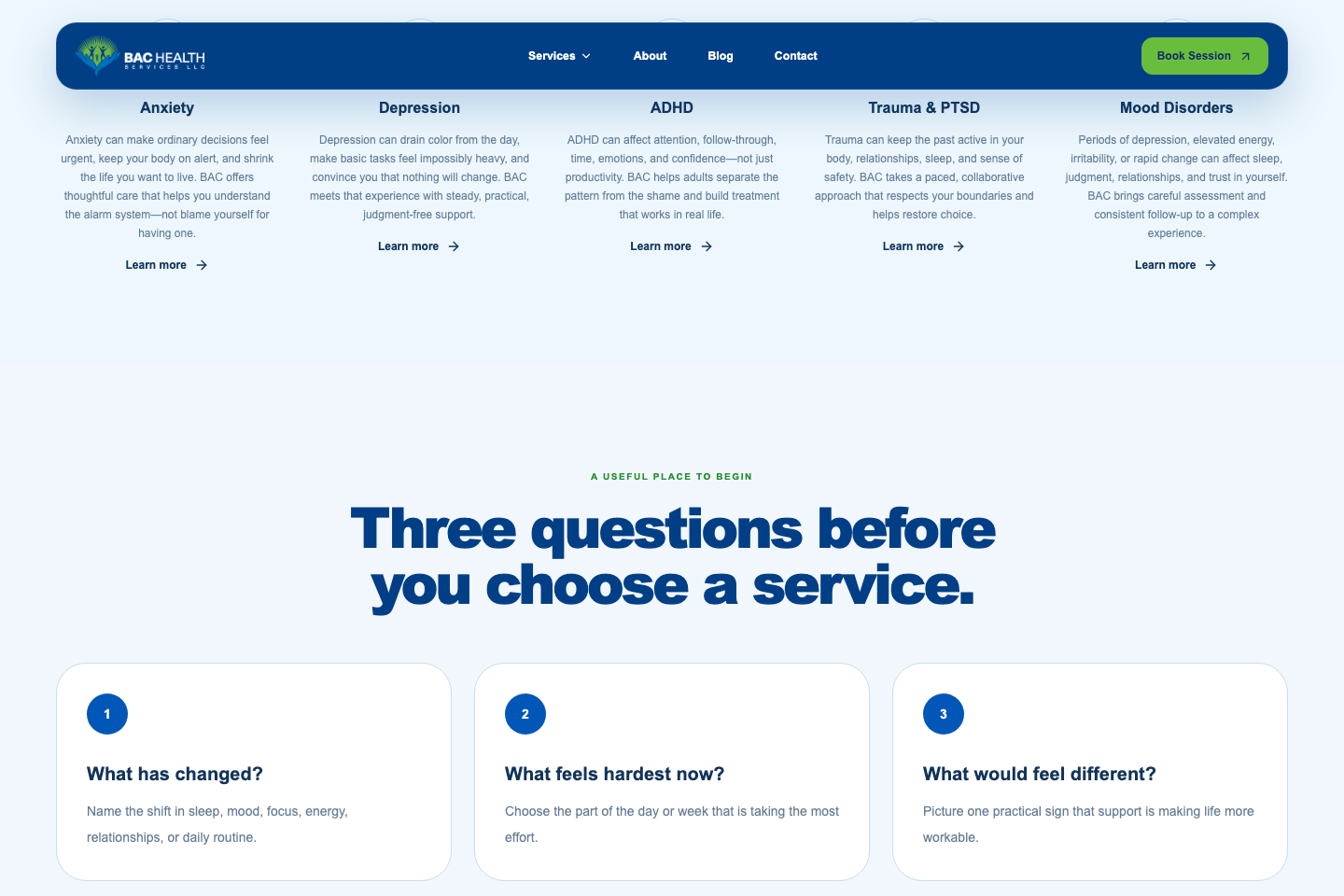
BAC Health Services three-question decision guide with cards for change, difficulty, and desired outcome.
Guidance replaces premature commitment with a small, useful reflection.View public site ↗
Practice / 03

Design trust into the path

Trust grows when the interface explains what happens before asking for commitment.

We use accessible contrast, readable type, descriptive links, visible focus states, clear privacy language, and questions that match the user’s mental model. These are product behaviors, not polish reserved for the end.

BAC’s three-question sequence gives a prospective client a pressure-free way to organize what changed, what feels hardest, and what better could look like before selecting a service.

Project evidenceBAC Health Services

A public mental-health experience that organizes services, concerns, care settings, and next steps around the questions a prospective client is already asking.

Visit bachealthservice.comNext: Full-stack engineering